Tax Structuring for Tech Startups: LLC, S-Corp, or C-Corp?
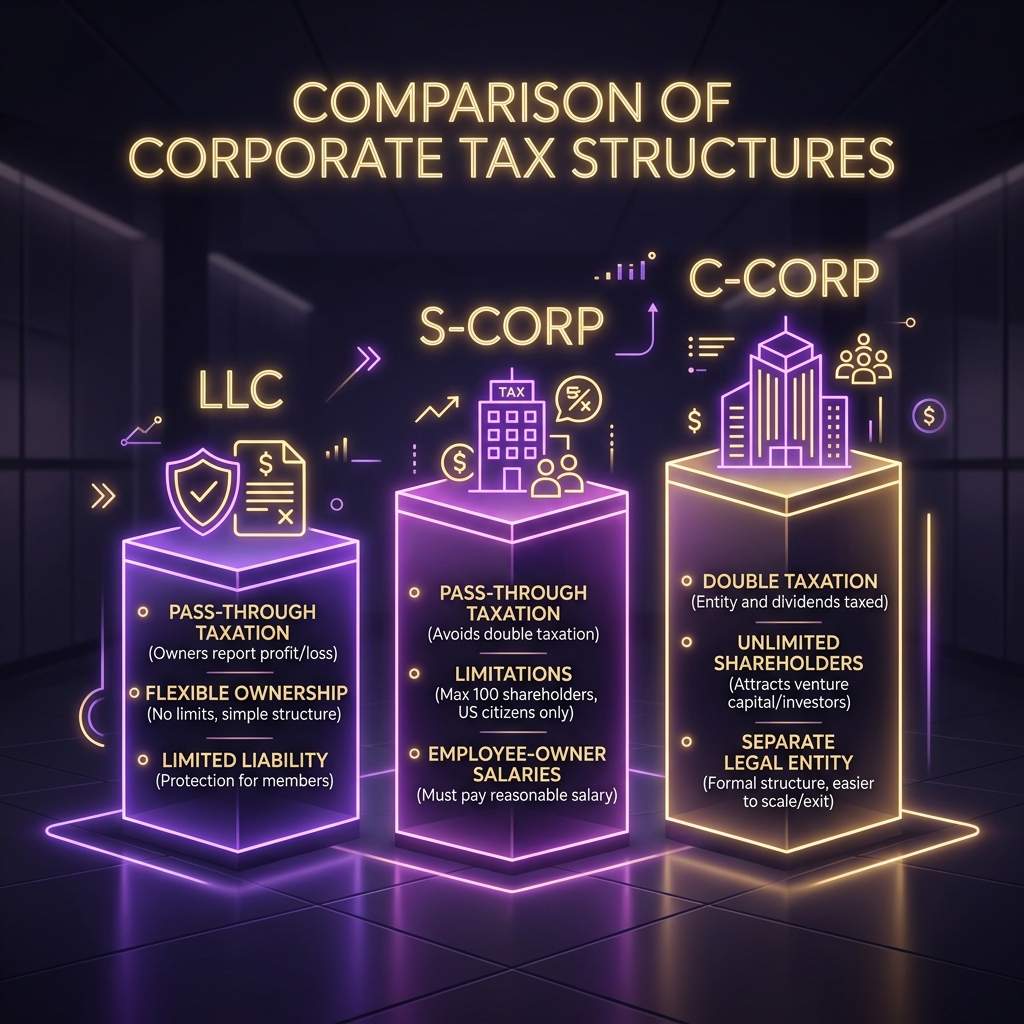
Choosing the right entity structure is one of the most critical decisions founders make. The choice between an LLC, S-Corp, and C-Corp has long-term tax, legal, and operational consequences.
The Delaware C-Corp and QSBS (Section 1202)
For startups looking to raise venture capital, the Delaware C-Corporation is the gold standard. The primary driver for this is Section 1202 of the Internal Revenue Code, which governs Qualified Small Business Stock (QSBS).
If you acquire stock in a qualified Delaware C-Corporation with gross assets under $50 million and hold it for at least 5 years, you can exclude up to 100% of the capital gains (up to $10 million or 10x your cost basis) from federal tax upon sale. This is a massive tax benefit that is only available to C-Corporation shareholders.
LLCs and Pass-Through Taxation
Limited Liability Companies (LLCs) are pass-through entities. The LLC itself pays no federal income tax; instead, profits and losses flow directly to the owners' personal tax returns. This avoids the "double taxation" of C-Corps (where the corporation pays tax and then shareholders pay tax on dividends).
However, LLCs are not suitable for VC funding because VCs cannot invest in pass-through entities due to tax restrictions on their institutional partners.
S-Corporation Election
An S-Corporation is a tax status chosen by an LLC or C-Corp. It offers pass-through taxation while allowing owners to divide their income between a "reasonable salary" (subject to self-employment tax) and distributions (exempt from self-employment tax). S-Corps are limited to 100 shareholders who must be US citizens or residents, making them unsuitable for venture-backed companies.
Conclusion: If you plan to raise institutional capital, start as a Delaware C-Corp. If you are bootstrapping a service business, an LLC or S-Corp status is often more tax-efficient.
