Demystifying the R&D Tax Credit: Is Your Startup Eligible?
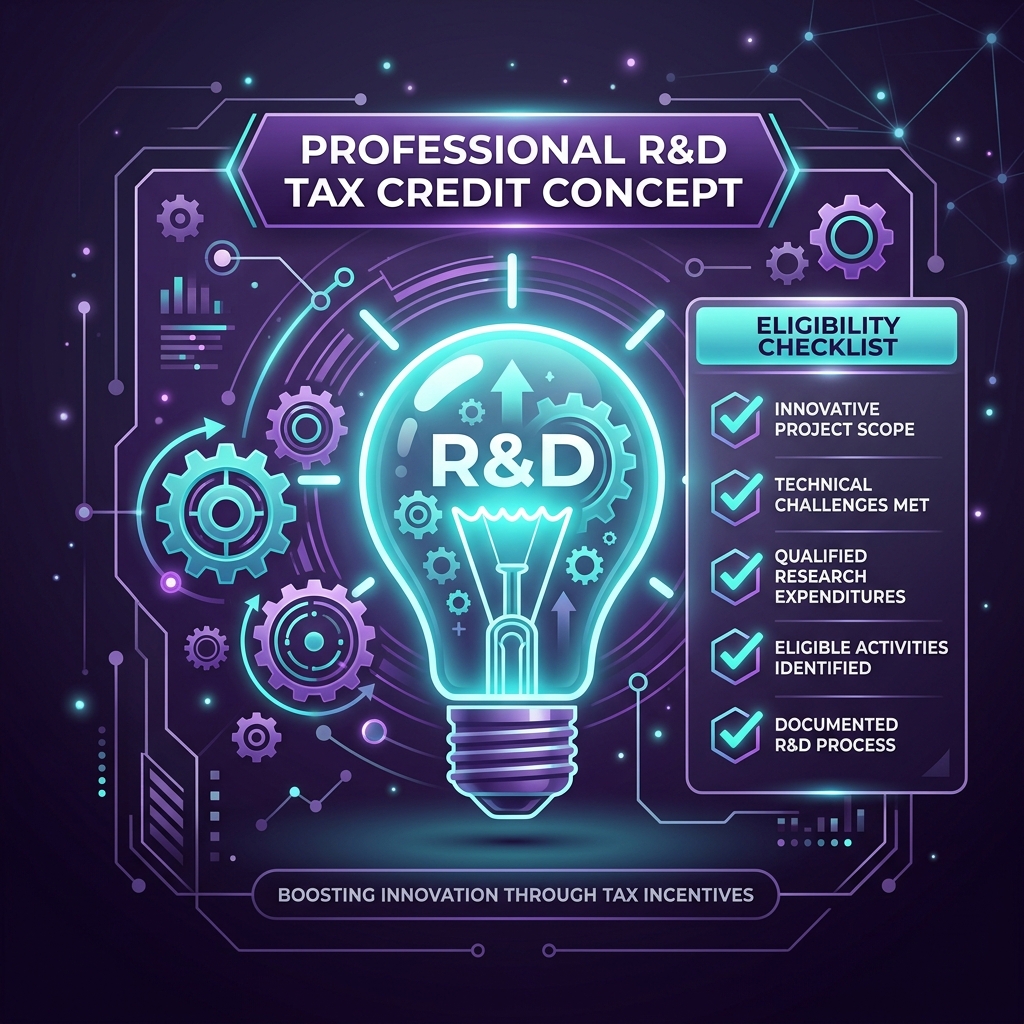
Many startups believe that research and development (R&D) tax credits are only for pharmaceutical giants or aerospace laboratories. In reality, any software startup designing new architectures or resolving technical uncertainties is highly likely to qualify.
What is the Section 41 R&D Credit?
The Federal R&D Tax Credit is a dollar-for-dollar tax offset under Section 41. Historically, companies needed a tax liability to use the credit. However, since the PATH Act of 2015, qualified small businesses (companies with under $5 million in gross receipts and less than 5 years of revenue) can use the credit to offset up to $250,000 per year in payroll taxes (specifically the employer portion of Social Security).
The Four-Part Test
To qualify, your research activities must pass the IRS's four-part test:
- Permissible Purpose: The activity must relate to a new or improved product, process, software, formula, or technique that improves functionality, performance, reliability, or quality.
- Elimination of Uncertainty: You must have faced technological uncertainty at the outset (i.e., you didn't know if the design would work or how to execute it).
- Process of Experimentation: You must have evaluated alternatives through modeling, simulation, testing, or trial-and-error.
- Technological in Nature: The research must rely on physical sciences, biological sciences, computer science, or engineering.
Qualified Expenses
You can claim expenses in three main categories:
- Wages: The portion of employees' salaries spent performing or directly supervising qualified research (e.g., software developers, QA engineers).
- Supplies: Raw materials or cloud server hosting costs (like AWS or GCP) used specifically for development environments.
- Contract Research: 65% of fees paid to third-party US contractors performing qualified R&D.
Keep detailed JIRA logs, Git commit histories, and project specs to document your process and satisfy IRS audit standards.
